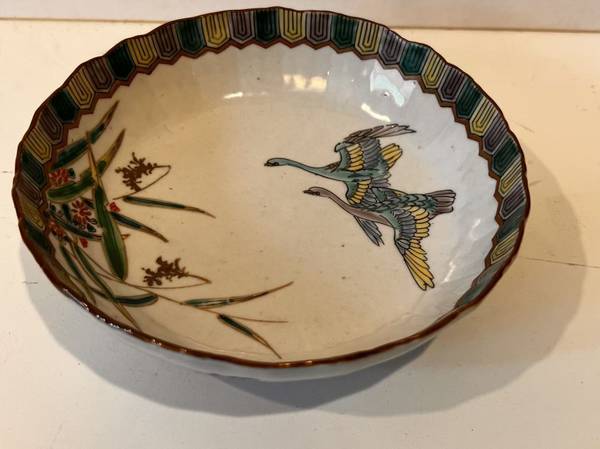
3 late Edo–early Meiji Japanese porcelain bowls/dishes, made in early to mid 19th century. These are small serving or sweets dishes (kobachi/kashiki) around 6 inches wide, a common size in 19th‑century domestic sets.
The rectangular dish with vegetable and mouse motif uses playful auspicious imagery (abundance, fertility) seen on Imari sweets plates used at festive occasions in the 19th century. The scalloped bowl with two flying cranes, bamboo and a geometric rim combines standard good‑fortune symbols and border work similar to Meiji Imari export bowls. The simpler blue‑and‑white scrolling designs on the other bowls echo Kakiemon/Ko‑Imari influences.
Old dealer labels on the bottoms dating them to “circa 1820” and “circa 1850”, respectively. Overall conditions are very good, with the pin-holing, firing specks, minor grit to the foot, consistent with nearly 2 centuries of household use.