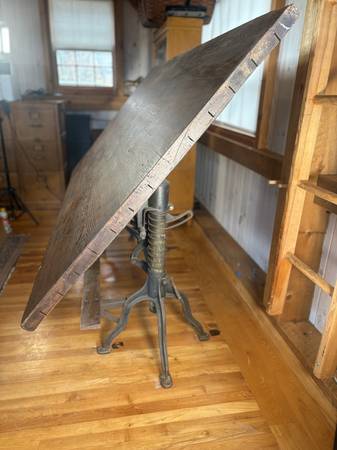
Large double-pedestal drafting table, made around 1895–1920 and attributed to the Morse Machine Company. Its 84" × 42" top is far bigger than the Morse tables now on the market, which run about 48" wide. It is complete, it works, and the top shows clear signs of being the original drafting board.
Built for a commercial drafting room, it features two cast-iron columns, each on three curved legs, joined by steel tie-rods so one crank raises, lowers, and tilts the whole 7-foot board evenly. Photos show a complete, original mechanism with no signs of damage or repair.
• Two counterbalance springs coiled around brass-toned inner columns. They carry the board's weight so it rises easily. The springs are intact and still under tension.
• Curved tilt arms under each end of the board, with pierced cast-iron brackets that bolt to the wood.
• A long lever with a turned grip and wing-nut locks to hold height and angle.
• Full tilt. The board swings from flat to nearly vertical, so it works as a table, desk, or display easel.
• The wooden footrest, fastened with old hardware and wood with the same patina as the top, appears somewhat aftermarket but of equal age.
Is the top original?
Since large drafting tables often lost their boards, your first question is this one. This table has a strong case:
• Hundreds of thumbtack holes spread across the whole surface. Before tape, draftsmen pinned every sheet to the board. These never show up in a replacement plank.
• Glued-up boards with cross-cleats underneath, standard drafting-board construction to keep a wide top flat.
• Bolt holes that appear original, and a top that fits the iron brackets exactly.
In our assessment, the board is "original," never refinished, with exquisite patina.
Why buy this?
An extraordinary piece of history if you need a big, beautiful working surface.
If you have a large kitchen, it's an island no one else has.
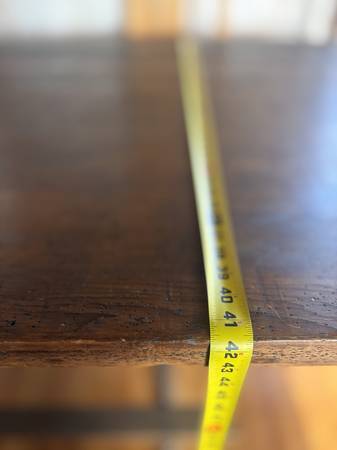
If you own a restaurant or bar, the 42-inch height in horizontal position is perfect for stools and will fit 10 of them.
If you're an architect, artist, or maker, use it for its original purpose.