We are a retired couple now in our early 80s who have been collecting African Art for over 60 years. From the mid-1960s through the early 1970s, we lived in several African countries, and travelled extensively in others. But that was then. Now: We recently sold our large retirement home and are moving into much smaller accommodations. We find ourselves with a need to do some serious downsizing. Too much stuff! It is time for us to help some of our objects find a new happy and appreciative home.
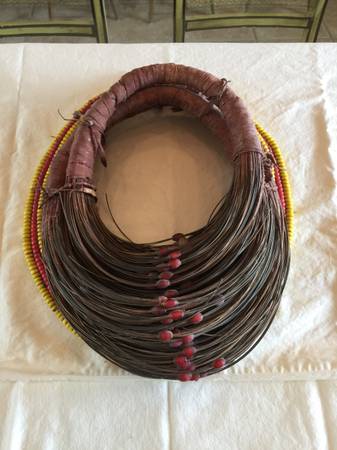
This listing is for a traditional woman’s wedding necklace (Mpooro) worn by a married woman of the Redille-Samburu people. We purchased this necklace in 1970 near the town of Marsabit in Kenya's Northern Frontier District. It was already old at that time.
The Redille-Samburu are a semi-nomadic Nilotic people who inhabit a harsh, arid region of North Central Kenya. They share much in the way of language, culture, traditions and origins with the better known Masai people who live further south in a more hospitable region. Wealth is based on livestock, and scant rainfall forces them to move frequently in search of new pastures to nourish their herds.
Bodily decoration and adornment are highly prized. Especially by women, who dress in bright fabrics and adorn themselves in bracelets, anklets, and wear elaborate, multi-tiered necklaces throughout the various stages of their lives.
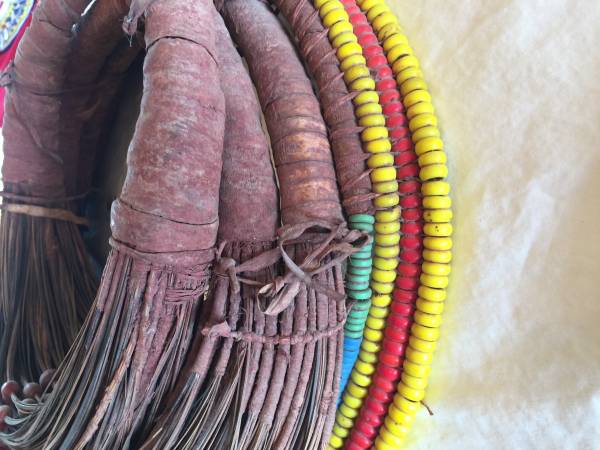
This particular necklace type, Mpooro, signifies the wearer’s status as a married woman, a desirable state. The necklace name comes from the mpooro beads that are part of the necklace’s construction.
Red mpooro beads are extremely important in Redille-Samburu culture. When a girl is to be married, her mother gives her beads from her own marriage necklace. After being married for approximately a month, the girl is brought gifts of milk and additional mporro beads by neighboring and related women. These beads symbolize fertility and wealth, as well as a connection to ancestors.
Mpooro beads have been made in Europe since the 19th century specifically for trade with African communities. By the end of the 20th century, the beads had also become highly desired by western consumers, creating a scarcity among the original users in Africa. Owners of the necklaces have started to rent and loan their necklaces to women whose daughters are about to be married. Since Mporro necklaces are a necessary component of a marriage ceremony, this arrangement is beneficial to both parties.
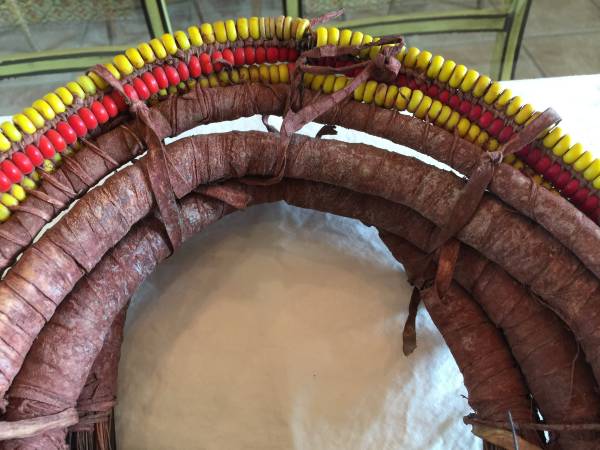
Mpooro marriage necklaces were originally made completely from animal hair, especially hair from the tails of elephants and giraffes. But now that elephant and giraffe hair is illegal to obtain, they are usually constructed from a combination of doum palm fibers and sheep or goat leather.
This is a rare and authentic African ethnographic object. Please look at the photos carefully. The collar is large, heavy, and elaborately constructed. It weighs over 4 lbs. Approximate dimensions are: length: 14 ½ in, width: 12 ½ in, and thickness: 4 ½ in.
We have many other African Art and ethnographic objects from our years travelling and collecting. If this is an area that is of interest to you, please contact me.