loading
reading
writing
saving
searching










QR Code Link to This Post
This 2010 Mitsubishi Lancer Evolution GSR is a performance-oriented sedan built around a turbocharged all-wheel-drive platform and a close connection between chassis response and power delivery. The GSR designation places this example in the version of the Evolution lineup that emphasizes driver control through a manual transmission and a tightly tuned mechanical package. Its body design follows the familiar four-door form of the Lancer family, with the Evolution treatment adding functional elements that support its intended role. The car's proportions are compact, and the structure is arranged to keep the driving position and the mechanical components closely integrated. It was engineered with attention to traction, steering precision, and braking confidence, and those characteristics define how the car is experienced on the road. The hardware underneath the sheet metal is the main reason for its reputation, and that remains the central point of interest with this model.
Inside, the cabin presents a straightforward environment with the controls and seating arranged for practical use. Automatic Climate Control is included, providing a regulated system for cabin temperature management without requiring constant manual adjustment. The interior design is oriented around the driver, with clear sightlines and a layout that keeps commonly used controls within easy reach. Materials and trim follow the expectations of a compact performance sedan from this period, balancing utility with a more focused driving atmosphere. The seating position is relatively low, and the driving interface reflects the car's performance intent while still serving daily use. Bluetooth is included as well, allowing compatible devices to connect through the vehicle's audio and communication system. That feature is integrated without altering the basic structure of the dashboard or changing the straightforward character of the interior.
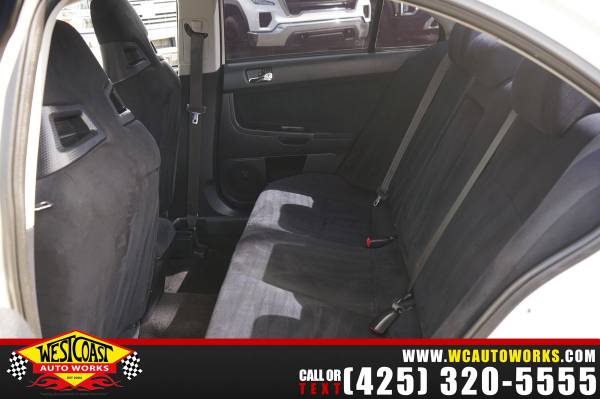
The equipment list also includes Side Impact Airbags, which add another layer of occupant protection beyond the standard frontal crash restraints. Fog Lights are present on the exterior, and they are part of the car's lighting equipment rather than an added accessory. Keyless Entry is fitted as well, giving the vehicle a convenient access feature without changing the way the doors, locks, or ignition hardware are arranged in a visible sense. These items are practical additions that fit the rest of the car's equipment profile. The Evolution's bodywork remains purposeful in appearance, with openings, vents, and trim elements that are there to support the vehicle's operating needs rather than decorative themes. The sedan format also provides usable rear seating and a conventional trunk, which keeps the car relevant for routine travel while preserving the performance character associated with the nameplate. Nothing in the specification suggests an attempt to soften the car's intent, and the included items support it without changing its core identity.
On the road, this Mitsubishi is defined by the interaction between its drivetrain, suspension tuning, and steering response. The GSR trim is recognized for a direct, involved driving feel, and the chassis is set up to make use of the traction available from its all-wheel-drive system. Acceleration is delivered through the powertrain with a strong emphasis on control, and the transmission choice allows the driver to manage gear changes in a more deliberate way than an automatic alternative would. The suspension is firm by everyday-sedan standards, which is consistent with the demands of a car designed to hold its line under load and maintain stability during spirited use. Braking performance and cornering balance are part of the package, and those qualities are reflected in how the car is expected to be driven. In ordinary use, it still functions as a four-door vehicle with room for passengers and the convenience items already listed, but its engineering remains centered on response, grip, and the mechanical precision that define the Evolution name.